
I’ve been iterating on my AI Agent framework for a while now. Like most agents, its default form is a chatbot. But when you actually build AI SaaS products on top of it, you quickly realize it doesn’t have to be a chatbot at all.
It can be a form that triggers an Agent-Tool loop—complete with skills and a memory system. It can be a step-by-step wizard that uses the agent framework under the hood. It can take many other shapes too.
This flexibility isn’t just nice to have—it’s often essential. Real-world scenarios demand different UIs for different contexts: better user experience, higher conversion rates, and fitting naturally into the user’s workflow all require the ability to call an Agent from various interface patterns.
In my AI SaaS product (www.aiuidesigner.com), I use multiple UI patterns to invoke agents. For example, the quick-start component on the homepage hero uses a form to trigger a plan agent. That agent may call an AI Search tool depending on the situation, and ultimately returns a plan result. Throughout this process, nearly every core part of the agent framework comes into play: the agent itself, context assembly, tools, the memory system, and even agent metering/billing.
独立产品人日记
Notes on indie products, AI tools, growth, and engineering.
Related Articles
Codex + Hyperframes: Make a Product Video with One Sentence
Using the Codex + Hyperframes plugin to generate a product introduction video with just one prompt — no more painful video editing.
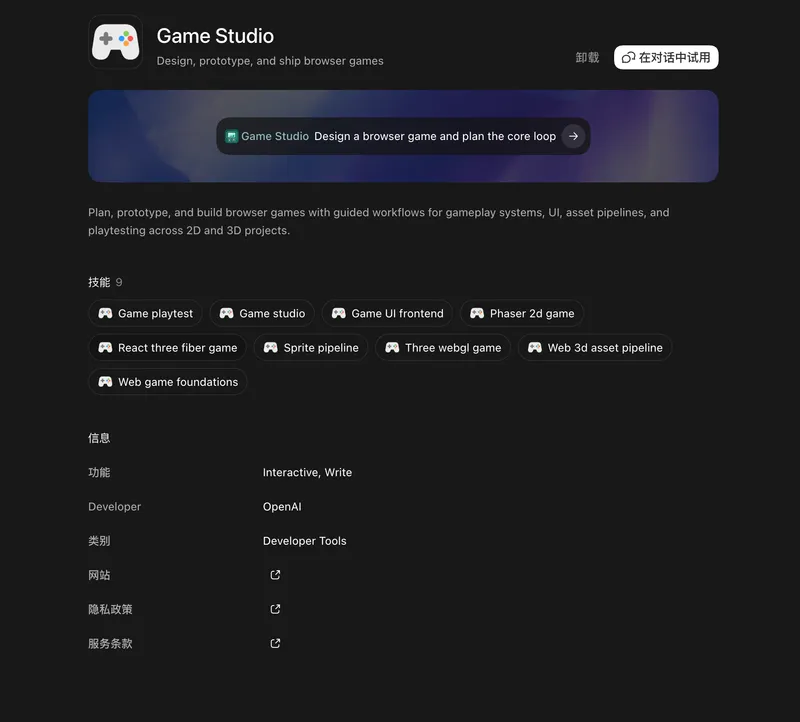
Codex + Game Studio: A Great Tool for Making Games
Hands-on experience with Codex's Game Studio plugin for browser game development — covering 2D games with Phaser, 3D experiments, and why this combo stands out.
The Key to AI Agents Is How to Make AI Perform Better
Using the HTML vs JSON architecture decision for an AI UI Designer as a case study, this article argues that in the AI era we must abandon old best practices and design products around one core principle: how to let AI do its best work.