

www.aiuidesigner.com just shipped a new version today. The most significant improvement: manual editing and local AI modification for AI-generated UIs. Simply click on any element you want to change, and a property panel appears — edit manually or let AI do it. Double-click to edit directly on the canvas.
The UI is HTML under the hood. So editing means editing HTML. There are generally two approaches to implementing this kind of web editor:
HTML-based. AI generates HTML, and you edit the HTML directly.
JSON-based. AI generates structured JSON, a renderer converts it to HTML for display, and edits modify the structured JSON.
Conventional wisdom says JSON-based is the way to go. Even AI analysis recommends it.
But I tried that approach and built it — only to realize it doesn’t work.
Sure, the functionality works. But the UI quality? A shadow of what the HTML-based approach delivers.
AI is simply better at outputting exactly what you want, not at producing a skeleton to be assembled by pre-built components.
The old best practice — JSON-based structured approaches — was the right answer before the AI era. In the AI era, it’s a unnecessary detour, a roundabout solution that undermines quality.
The key to AI Agents is how to make AI perform better.
So in the AI era, we should design products around this principle. Otherwise, it’s all pain for little gain.
And this means a lot of past experience, methods, theories, and best practices may need to be rethought.
独立产品人日记
Notes on indie products, AI tools, growth, and engineering.
Related Articles
Codex + Hyperframes: Make a Product Video with One Sentence
Using the Codex + Hyperframes plugin to generate a product introduction video with just one prompt — no more painful video editing.
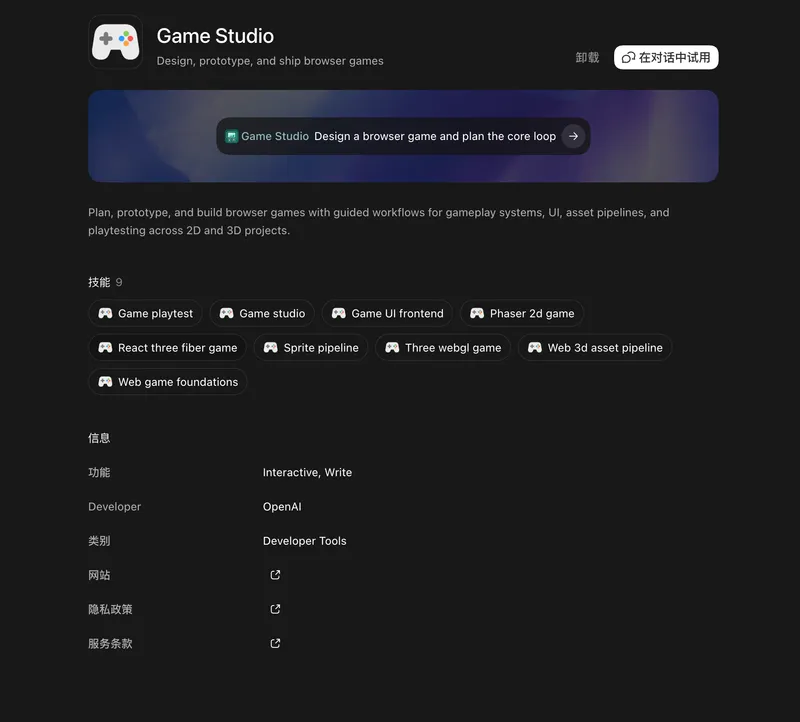
Codex + Game Studio: A Great Tool for Making Games
Hands-on experience with Codex's Game Studio plugin for browser game development — covering 2D games with Phaser, 3D experiments, and why this combo stands out.
AI Agents Don't Have to Be Chat
Exploring practical UI forms for AI Agent frameworks—beyond chatbots, forms, step-by-step wizards, and other UI patterns for different scenarios and user experiences.