
Google quietly rolled out something called Google AI Edge Foresight. Right now, it only runs on Macs, and you need one with an M-series chip.
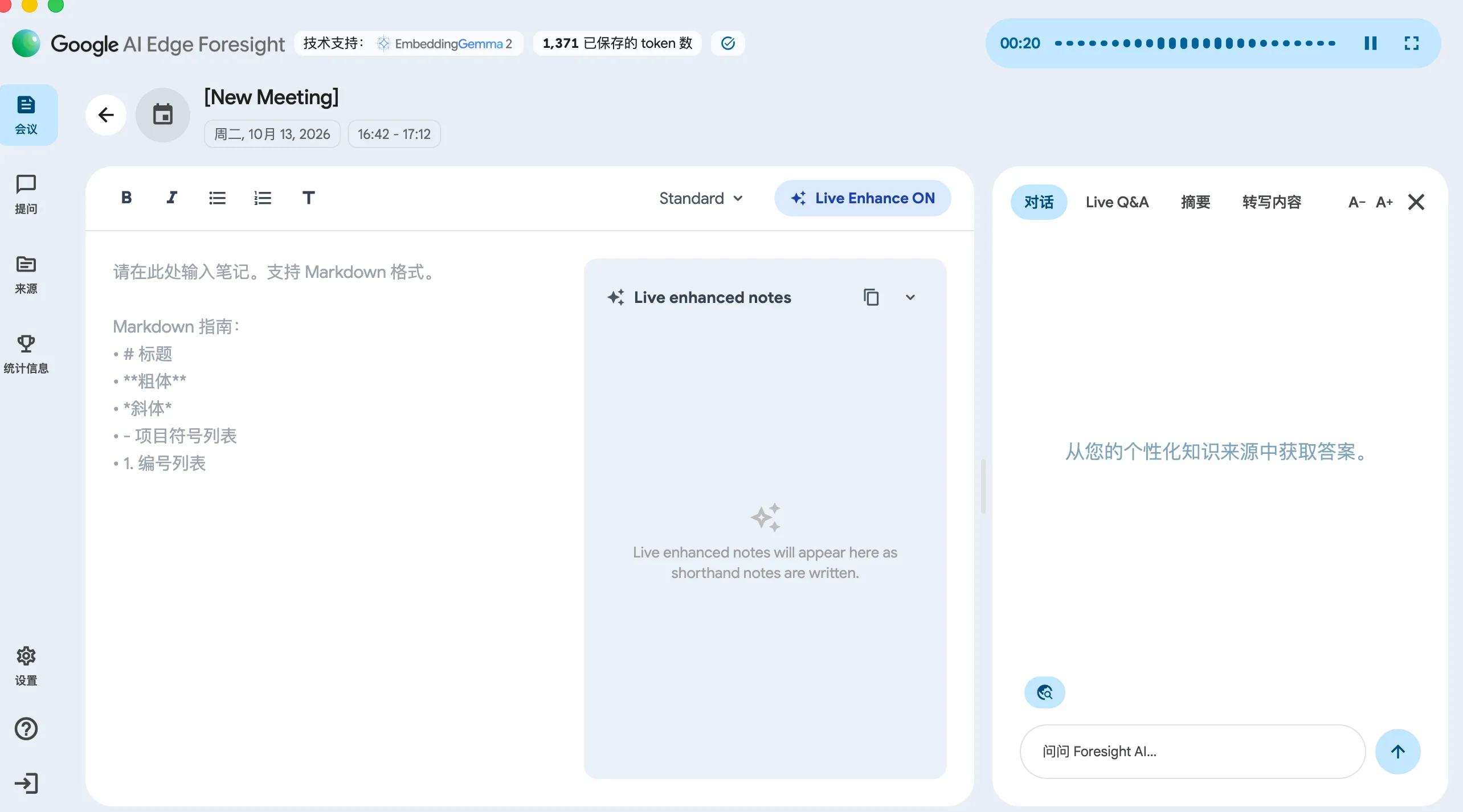
What does it do? Simply put, it’s an AI tool for taking notes during meetings: speech transcription, meeting summaries, and so on.
Sounds pretty ordinary. Nothing special. Anyone who’s good with AI could vibe code something like this.
But Google’s version really is different. Wherever AI is needed, whether for transcription or summaries, it doesn’t call an AI API. Instead, it uses AI models installed on your own machine.
In other words, this product is built on local AI models.
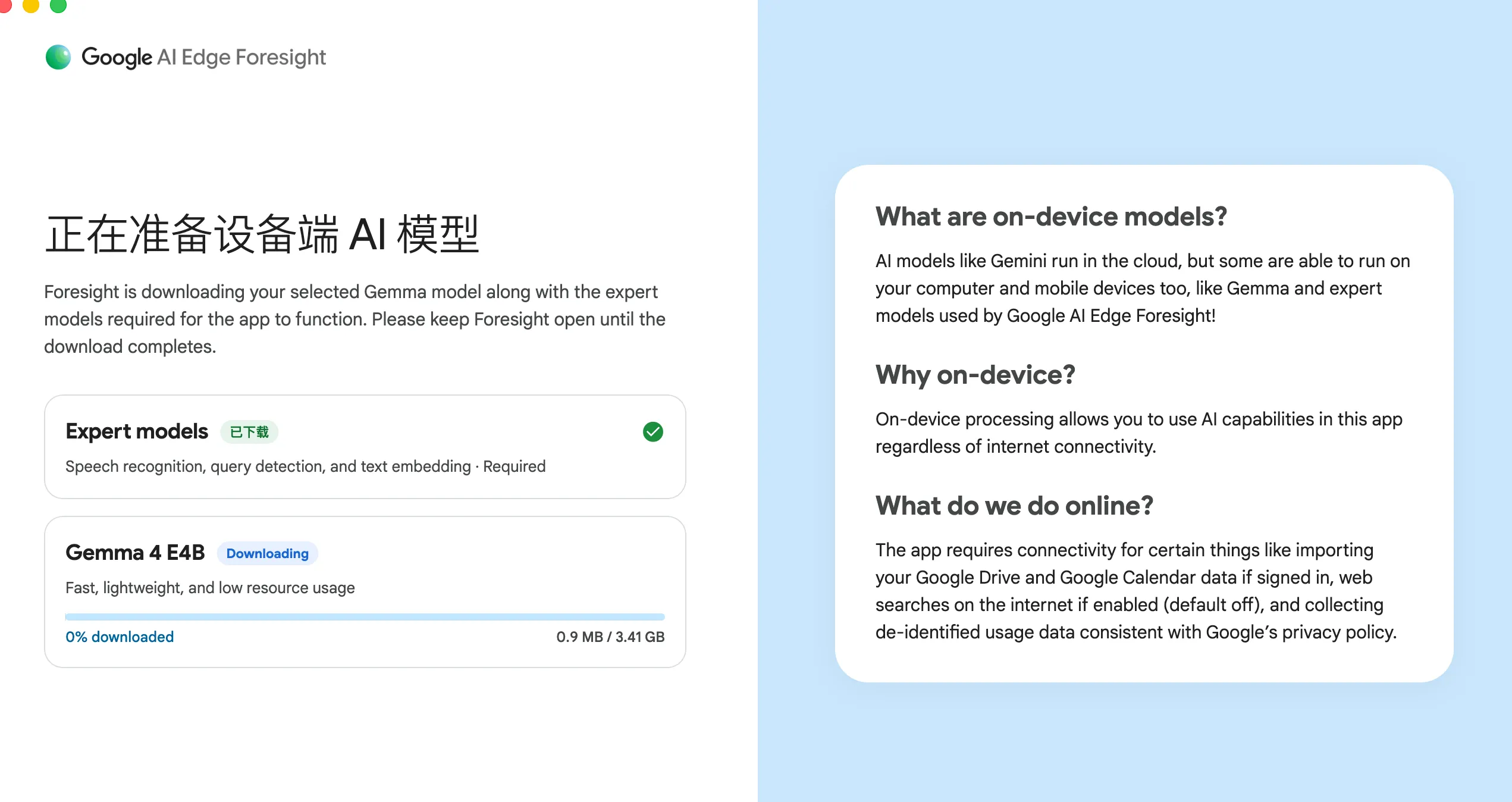
The installer is a little over 100 MB. After installation, it automatically downloads the required models, totaling a little over 4 GB. The core model is EmbeddingGemma 2.
I gave it a try, and it’s pretty good. At least there’s no network latency.
Could products built on local models become another trend in AI?
Google’s introduction and download page: Google AI Edge Foresight
独立产品人日记
Notes on indie products, AI tools, growth, and engineering.
Related Articles
ChatGPT's 28 Days: A Rare Sustainable Hotspot on X?
X never lacks hot topics, but few of them last. ChatGPT's '28 Days' program manufactures a new hotspot every day, turning the campaign into a fully controllable, replicable experiment in sustaining attention.
Gemini: The King Is Back?
After falling behind for nearly a year, Gemini has suddenly made waves: the Gemini 4 leak, Claude 5.5 integration in Antigravity, and Google tightening access to its Gemini models. For free users, Gemini is basically an enhanced search engine.
Token Plan: A Black Box, and a Good Business
Token is becoming another everyday utility after water, electricity, coal, and cloud computing. Cloud providers are rolling out seemingly cheap Token Plans, but in real-world use, ChatGPT and Claude subscriptions turn out to be the better deal. And many Token Plans are a black box — priced in credits, with a conversion ratio only the vendor knows, one they can change at will.