

I spent some time poking around astrocade.com.
It’s a platform where anyone can generate games using AI. They call themselves the TikTok of games.
I gave it a try. The workflow is essentially Vibing Coding — describe what you want, and the AI builds it. The catch is that generation takes a while, and you won’t get a polished product in one shot. It takes multiple rounds of back-and-forth with the AI to get something decent.
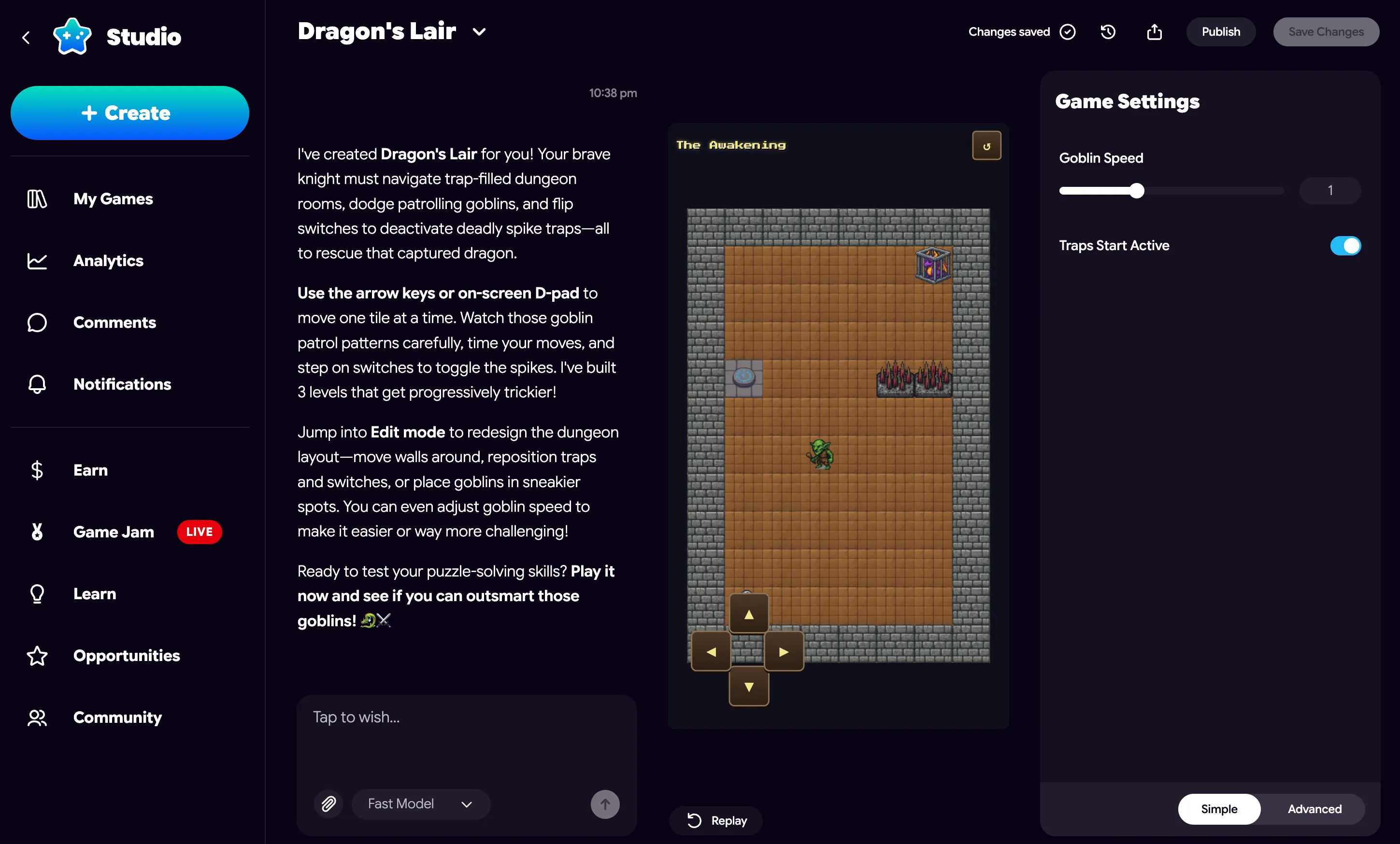
The people making games on Astrocade fall into two broad categories. On one side, you have professional game developers who use AI tools to speed up their workflow. On the other, you have casual users who just want to have fun, show off their creations on social media, and maybe make a bit of money if they’re lucky.
Astrocade is clearly chasing the second group — and that’s the massive audience. The question is whether that audience is willing to pay. So far, the data suggests casual users have a much lower conversion rate than professionals.
独立产品人日记
Notes on indie products, AI tools, growth, and engineering.
Related Articles
Google AI Edge Foresight: Another Direction for AI Products?
Trying Google AI Edge Foresight: transcription and meeting summaries run on local AI models. Could products built on local models become another trend in AI?
ChatGPT's 28 Days: A Rare Sustainable Hotspot on X?
X never lacks hot topics, but few of them last. ChatGPT's '28 Days' program manufactures a new hotspot every day, turning the campaign into a fully controllable, replicable experiment in sustaining attention.

Gemini: The King Is Back?
After falling behind for nearly a year, Gemini has suddenly made waves: the Gemini 4 leak, Claude 5.5 integration in Antigravity, and Google tightening access to its Gemini models. For free users, Gemini is basically an enhanced search engine.